Balsamic Peach Burrata Chicken Skillet
 Save
Save
The first time I tried to combine the sweet perfume of ripe peaches with the creamy decadence of burrata, I was standing in my grandma’s kitchen on a sweltering July afternoon, the windows thrown open to let in the scent of blooming gardenias. The moment I lifted the skillet lid, a cloud of fragrant steam hit me like a warm hug, carrying notes of tangy balsamic that danced with the buttery aroma of sautéed chicken. I remember the sizzle of the olive oil as it kissed the pan, the golden crust forming on the breasts, and the soft, almost buttery pop of the garlic as it turned a honey‑gold color. That instant, I knew I had stumbled upon something that could become a family favorite, a dish that feels both elegant enough for a dinner party and comforting enough for a weekday supper.
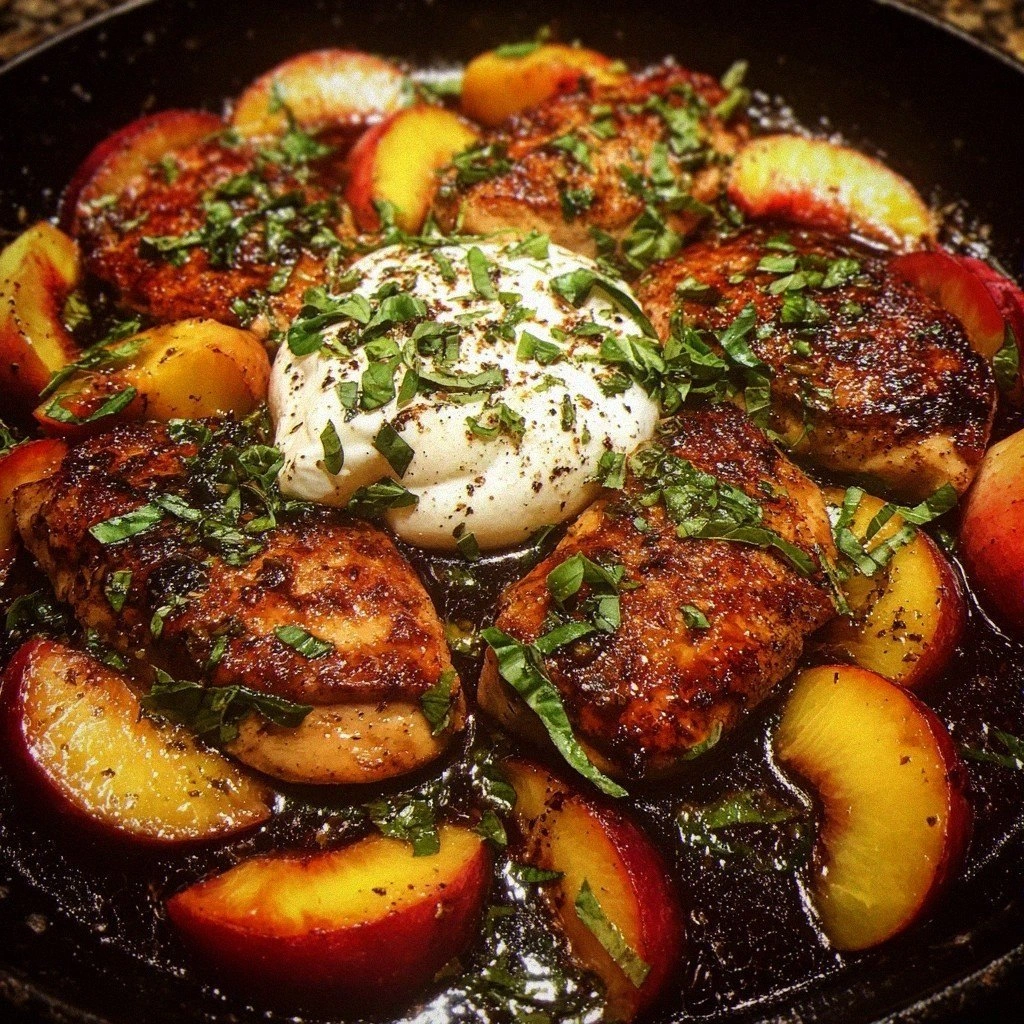
What makes this recipe truly special is the marriage of textures: the crisp, caramelized exterior of the chicken, the juicy burst of peach slices, and the luscious, milky core of burrata that melts into a silky sauce as soon as it meets the heat. The balsamic reduction adds a glossy, sweet‑sour glaze that ties everything together, turning simple ingredients into a symphony of flavors that sings on the palate. Imagine serving a skillet that looks like a piece of art—vivid orange peach slices against the creamy white of burrata, speckled with fresh green basil—while the whole house is filled with the sound of clinking forks and delighted sighs. Have you ever wondered why restaurant versions of this dish taste so different? The secret lies not just in the ingredients but in the timing, the layering, and a few tricks I’ve learned over the years.
But wait—there’s a hidden twist in step four that will change the way you think about sauces forever. I won’t spill the beans just yet, but trust me, it’s a game‑changer that even seasoned cooks often overlook. And if you’re the type who loves a good story, you’ll appreciate the little anecdote about the time I accidentally used white wine instead of balsamic and learned the hard way why acidity matters. The best part? All the ingredients are pantry‑friendly, and the whole process takes under an hour, making it perfect for busy evenings when you still want to impress.
So, grab your skillet, round up the freshest peaches you can find, and get ready to create a dish that will have your family asking for seconds—maybe even thirds. Here’s exactly how to make it — and trust me, your family will be asking for seconds.
🌟 Why This Recipe Works
- Flavor Depth: The combination of balsamic vinegar and ripe peaches creates a sweet‑tart glaze that penetrates the chicken, delivering layers of flavor that evolve with each bite. The acidity balances the richness of the burrata, ensuring the dish never feels heavy.
- Texture Contrast: You get a satisfying crunch from the seared chicken, a juicy burst from the peach slices, and a silky melt from the burrata—all in one mouthful. This contrast keeps the palate engaged from the first forkful to the last.
- Ease of Execution: With just one skillet, you minimize cleanup while still achieving a restaurant‑quality presentation. The steps are straightforward, but the result feels sophisticated.
- Time Efficiency: The entire dish comes together in about 45 minutes, making it ideal for weeknight dinners without sacrificing flavor. You’ll be amazed at how quickly the sauce thickens and the cheese softens.
- Versatility: This recipe can be served over rice, quinoa, or even a bed of fresh greens, allowing you to adapt it to any dietary preference or seasonal side you have on hand.
- Nutrition Balance: Lean chicken provides protein, peaches add natural sweetness and vitamins, and burrata offers a dose of calcium and healthy fats, making the dish both satisfying and nourishing.
- Ingredient Quality: Using fresh, ripe peaches and high‑quality burrata elevates the dish from ordinary to extraordinary, proving that simple ingredients can shine when treated with respect.
- Crowd‑Pleasing Factor: The bright colors and indulgent flavors make it a show‑stopper for guests, yet it remains comforting enough for a family meal.
🥗 Ingredients Breakdown
The Foundation
The star of the show is the boneless, skinless chicken breasts. I choose chicken breasts because they cook quickly and absorb the balsamic‑peach glaze beautifully, but you could swap in thighs for extra juiciness if you prefer dark meat. Look for breasts that are uniform in thickness; this ensures even cooking and a consistent texture throughout. If you’re buying from a farmer’s market, feel the meat—it should feel firm yet slightly springy, a sign of freshness.
Next, the ripe peaches bring a natural sweetness that pairs perfectly with the acidity of balsamic. Choose peaches that yield gently to pressure and have a fragrant aroma at the stem end. If peaches are out of season, frozen sliced peaches work in a pinch, but fresh fruit will give you that burst of juicy flavor that makes the dish sing. Slice them into half‑moon pieces about a quarter‑inch thick so they soften without disintegrating.
Aromatics & Spices
Garlic, minced is the aromatic backbone, adding a warm, earthy depth that rounds out the sweetness of the fruit. I always mince my garlic just before cooking to keep its flavor bright; pre‑minced garlic from a jar can lose its punch over time. A quick tip: let the minced garlic rest for a minute before adding it to the pan—this allows the enzymes to develop a richer flavor.
Olive oil serves as the cooking medium, providing a subtle fruitiness that complements both the chicken and the peaches. Use extra‑virgin olive oil for the best flavor, but if you’re looking for a higher smoke point, a light olive oil works just as well. Drizzle it into the pan after it’s hot; you’ll hear a satisfying sizzle that signals the start of caramelization.
The Secret Weapons
Balsamic vinegar is the magic elixir that ties everything together. Its complex, sweet‑sour profile creates a glossy glaze that coats the chicken and peaches, turning the skillet into a mini‑saucepan. I recommend using a high‑quality aged balsamic for a deeper flavor; cheap versions can be overly sharp and lack the subtle fruit notes that make the dish shine.
Burrata cheese is the indulgent finishing touch. Its creamy interior melts into a luscious sauce, while the outer mozzarella shell provides a subtle chew. When you break the burrata open, the creamy center pools over the chicken, creating a velvety coating that feels luxurious. If burrata isn’t available, fresh mozzarella paired with a dollop of ricotta can mimic the texture, though the flavor won’t be quite as buttery.
Finishing Touches
Fresh basil, chopped adds a bright, herbaceous finish that lifts the dish from hearty to fresh. I love tearing the leaves just before serving to release their essential oils; this prevents the basil from wilting too early and losing its vibrancy. A sprinkle of extra basil on top not only adds color but also a fragrant aroma that greets diners as soon as the skillet is placed on the table.
Salt and pepper are the universal enhancers. Season the chicken generously on both sides before searing; this creates a flavorful crust that locks in moisture. I recommend using flaky sea salt for a subtle crunch and freshly cracked black pepper for a hint of heat that balances the sweet glaze.
With your ingredients prepped and ready, let's get cooking. Here's where the fun really begins...
🍳 Step-by-Step Instructions
🔐 Expert Tips for Perfect Results
The Taste Test Trick
Before you add the final splash of balsamic, take a tiny spoonful of the sauce and taste it. If it feels too sharp, a pinch of honey or a drizzle of maple syrup can round out the acidity without making it sweet. This small adjustment can transform the glaze from merely good to spectacularly balanced. Trust your palate—sometimes a tiny tweak makes all the difference.
Why Resting Time Matters More Than You Think
After the skillet is off the heat, let the chicken rest for at least two minutes before cutting. Resting allows the juices to redistribute, preventing them from spilling out and leaving the meat dry. I once cut into a hot chicken breast immediately and learned the hard way that the juices ran straight onto the plate, making the dish look sad. Patience at this stage ensures each bite is juicy and flavorful.
The Seasoning Secret Pros Won’t Tell You
Season the chicken twice—once before searing and again after the glaze forms. The first seasoning builds the crust, while the second layer penetrates the meat as it finishes cooking, infusing it with the sweet‑tart notes of the balsamic‑peach sauce. This double‑seasoning technique is a hidden gem that professional chefs use to amplify flavor depth.
Managing Heat for the Perfect Glaze
Keep the heat on medium‑low once the balsamic is added; a high flame can cause the reduction to burn, turning the sauce bitter. A gentle simmer lets the liquid evaporate slowly, thickening into a glossy coat without scorching. If you notice the sauce thickening too fast, add a splash of chicken broth or a few drops of water to keep it smooth.
Burrata Handling Masterclass
When handling burrata, keep it chilled until the moment you add it to the pan. Warm burrata can become overly runny, losing the delightful contrast between the firm outer layer and the creamy center. I once left the cheese out for too long, and it turned into a soupy mess. Keep it in the fridge until you’re ready, then gently tear it and let the residual heat do the work.
🌈 Delicious Variations to Try
One of my favorite things about this recipe is how versatile it is. Here are some twists I've tried and loved:
Spicy Chipotle Peach Chicken
Add a teaspoon of chipotle in adobo sauce to the balsamic reduction for a smoky heat that pairs beautifully with the sweet peaches. The smoky undertones deepen the flavor profile, making the dish perfect for cooler evenings when you crave a little warmth.
Herb‑Infused Mediterranean Style
Swap the fresh basil for a blend of oregano, thyme, and rosemary. These herbs bring an earthy Mediterranean vibe that works especially well if you serve the skillet over a bed of couscous or quinoa.
Winter Apple & Sage Variation
Replace peaches with thinly sliced apples and add fresh sage leaves. The apple’s crisp sweetness and sage’s aromatic earthiness make a comforting, autumn‑ready version that still benefits from the creamy burrata.
Vegan Burrata Substitute
For a plant‑based twist, use a cashew‑based “burrata” made from blended soaked cashews, nutritional yeast, and a hint of lemon juice. It mimics the creamy texture and adds a subtle nutty flavor that complements the balsamic glaze.
Grilled Skillet Fusion
Give the chicken a quick char on a grill before finishing in the skillet. The smoky grill marks add depth, while the skillet ensures the sauce adheres perfectly. This hybrid method brings the best of both worlds—outdoor flavor with indoor control.
Cheesy Polenta Base
Serve the skillet atop a creamy polenta instead of on its own. The buttery polenta acts as a neutral canvas, soaking up the glaze and creating a comforting, hearty bowl that feels like a cozy dinner on a chilly night.
📦 Storage & Reheating Tips
Refrigerator Storage
Allow the skillet to cool to room temperature, then transfer the chicken, peaches, and sauce into an airtight container. Store it in the refrigerator for up to three days. When you’re ready to eat, reheat gently on the stovetop over low heat, adding a splash of chicken broth or water to revive the glaze without drying out the meat.
Freezing Instructions
If you want to freeze leftovers, separate the chicken and sauce from the burrata. Place the chicken and peach‑balsamic mixture in a freezer‑safe bag, removing as much air as possible. Freeze for up to two months. Thaw overnight in the refrigerator, then reheat on the stove and add fresh burrata just before serving for maximum creaminess.
Reheating Methods
The trick to reheating without drying it out? A splash of broth or a drizzle of olive oil added to the skillet while warming. Cover the pan loosely to trap steam, which keeps the chicken moist and helps the sauce cling. If you’re using a microwave, heat in short bursts and stir gently to distribute the heat evenly.
❓ Frequently Asked Questions
Can I use chicken thighs instead of breasts?
What if I can’t find fresh burrata?
Can I make this recipe gluten‑free?
How do I know when the chicken is fully cooked?
Can I use a different fruit instead of peaches?
Is it okay to add more garlic for a stronger flavor?
What side dishes pair best with this skillet?
Can I prepare the sauce ahead of time?
While the chicken finishes, tear the burrata into generous chunks and scatter them over the skillet. As the heat reaches the cheese, you’ll see the outer mozzarella soften and the creamy interior begin to ooze, forming a luscious, velvety sauce that pools around the chicken and peaches. Trust me on this one: don’t stir the cheese; let it melt naturally for the best texture.
Just before serving, sprinkle the chopped fresh basil over the top, allowing its bright green color to pop against the amber glaze. The basil’s aromatic oils will release in the heat, giving the dish a fresh, herbaceous finish that balances the richness of the cheese and the sweetness of the fruit. If you love a bit of crunch, add a handful of toasted pine nuts or slivered almonds at this stage.
Give the skillet a final gentle stir to coat everything in the glossy sauce, then turn off the heat. Let the dish rest for a couple of minutes; this short pause lets the flavors settle and the cheese thicken just enough to cling to each bite. Serve the skillet straight to the table—no plating needed—so guests can experience the sizzle and aroma right from the pan.
And there you have it! But before you dig in, let me share some tips that will take this from great to absolutely unforgettable...