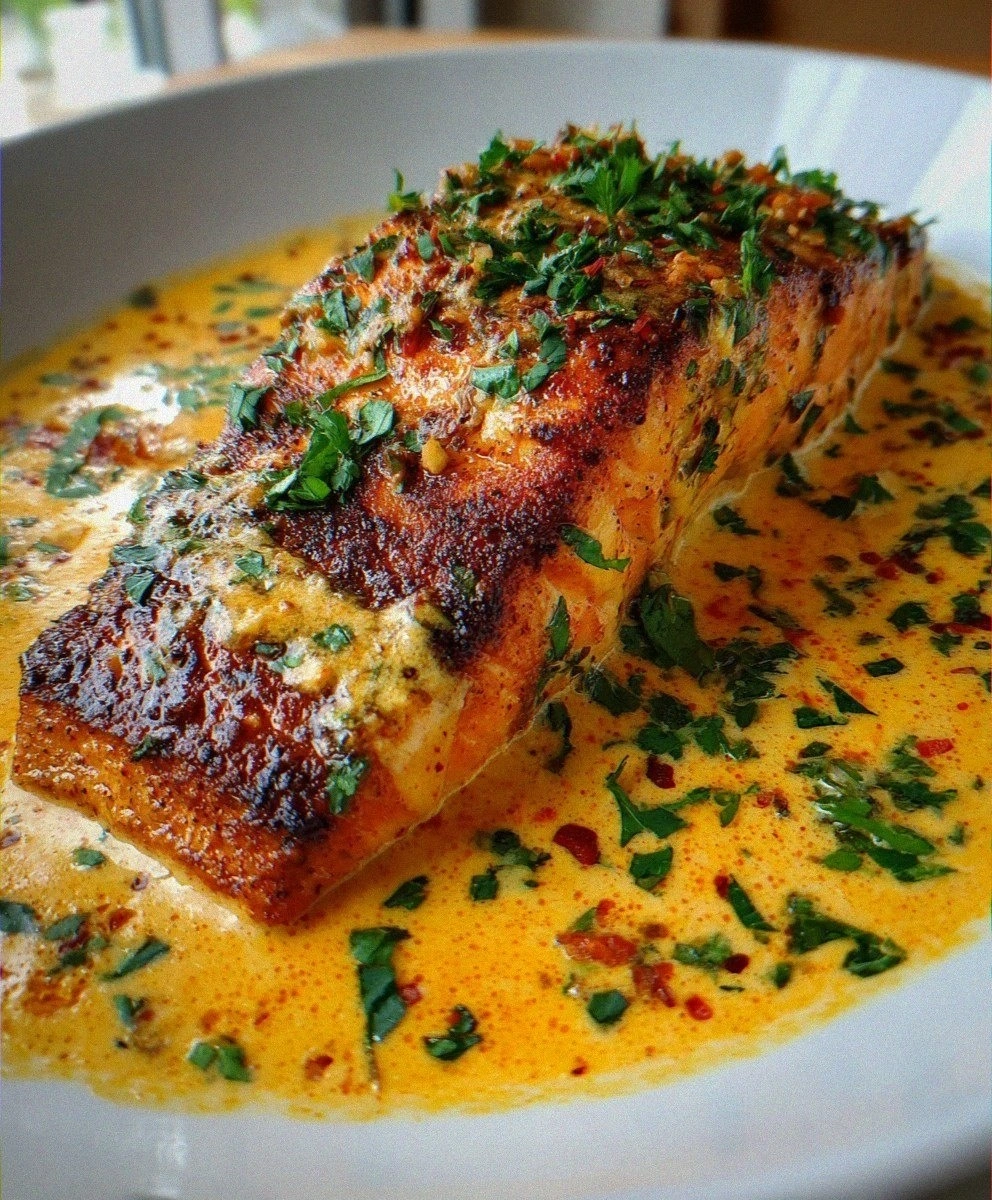
Cajun Creamy Salmon
 Save
Save
It was a rainy Thursday evening in my hometown, the kind of night when the wind whistles through the eaves and the kitchen becomes the warmest place in the house. I remember pulling a fresh fillet of salmon out of the freezer, feeling the cool, slick surface against my fingertips, and instantly picturing a plate that would melt away any lingering chill. The moment I tossed a generous pinch of Cajun seasoning into the pan, a bold, smoky perfume rose like a promise, and I could already hear the sizzle singing a duet with the rain outside. Have you ever noticed how a single spice can transform a simple dinner into a memory you’ll replay for weeks?
As the butter melted and began to foam, I added minced garlic, and the kitchen filled with an aromatic wave that made my stomach do a little happy dance. The heavy cream swirled in, turning the pan into a silky, ivory river that clung lovingly to the salmon’s pink flesh. The final flourish—grated Parmesan—added a nutty depth that made the sauce sing with richness, while the Cajun heat lingered just enough to keep you reaching for another bite. Imagine the contrast: the buttery cream, the bright, peppery kick, and the tender, flaky fish—all in one harmonious bite.
What makes this Cajun Creamy Salmon stand out isn’t just the flavor; it’s the balance of textures, the simplicity of the technique, and the fact that you can pull it together on a weeknight without sacrificing any of that restaurant‑level wow factor. You’ll be amazed at how a handful of pantry staples—cajun seasoning, butter, heavy cream, garlic, and Parmesan—can elevate a humble salmon fillet into a show‑stopping centerpiece. And guess what? There’s a secret trick in step four that most home cooks overlook, and it’s the key to that velvety sauce that clings perfectly to every bite.
Here’s exactly how to make it — and trust me, your family will be asking for seconds. The journey from raw fillet to creamy masterpiece is lined with tiny moments of discovery, and I’m going to walk you through each one. By the end of this article, you’ll not only have a dish that dazzles, but also a toolbox of tips you can apply to countless other meals. Ready to dive in? Let’s get cooking.
🌟 Why This Recipe Works
- Flavor Depth: The Cajun seasoning brings a layered heat that’s smoky, peppery, and just a touch sweet, while the Parmesan adds a savory umami that deepens the sauce. Together they create a flavor profile that feels both bold and comforting.
- Texture Harmony: The salmon stays tender and flaky, the butter gives a glossy finish, and the cream creates a luscious coating that coats each bite without feeling heavy.
- Ease of Execution: With only one pan needed, cleanup is a breeze, making this a perfect weeknight dinner that doesn’t demand a mountain of dishes.
- Time Efficiency: From prep to plate in under an hour, you can have a restaurant‑style meal on the table while the kids finish their homework.
- Versatility: Serve it over rice, pasta, or a simple salad, and the creamy sauce will adapt, making it a flexible base for many meals.
- Nutrition Boost: Salmon is packed with omega‑3 fatty acids, while the garlic and spices add antioxidants, giving you a heart‑healthy, satisfying dish.
- Ingredient Quality: Using fresh salmon and real butter ensures a rich mouthfeel, and the heavy cream provides a luxurious body that shortcuts like milk just can’t match.
- Crowd‑Pleaser Factor: The combination of spice and cream appeals to a wide range of palates, from kids who love buttery sauces to adults who crave a little heat.
🥗 Ingredients Breakdown
The Foundation
Salmon fillets are the heart of this dish. Whether you choose fresh or frozen, look for fillets that are firm to the touch and have a bright, pink hue. The richer the color, the higher the natural oil content, which translates to a buttery mouthfeel when cooked. If you’re buying frozen, let the fillets thaw slowly in the refrigerator overnight; this prevents a watery texture that can dilute the sauce. Trust me, I once tried a quick‑defrost in the microwave and the result was a soggy, bland piece of fish that never quite recovered.
Aromatics & Spices
Cajun seasoning is the spice hero here. You can purchase a high‑quality blend or create your own mix of paprika, cayenne, garlic powder, onion powder, dried thyme, and oregano. The magic lies in the balance of heat and earthiness; too much cayenne can overpower, while too little leaves the dish flat. Freshly minced garlic adds a pungent, aromatic kick that mellows as it cooks, becoming sweet and caramelized. I always crush the garlic with the flat side of my knife to release more flavor—simple, but it makes a world of difference.
The Secret Weapons
Butter and heavy cream are the dynamic duo that turn a simple pan sauce into a velvety masterpiece. Use unsalted butter so you can control the salt level; the Parmesan will already contribute a generous amount of saltiness. Heavy cream provides the body and richness that half‑and‑half simply can’t match, but if you’re watching calories, a 50/50 blend of cream and half‑and‑half works well without sacrificing too much silkiness. The key is to add the cream slowly, allowing it to emulsify with the butter and prevent the sauce from separating.
Finishing Touches
Parmesan cheese is the final flavor amplifier. Its nutty, slightly salty profile melds perfectly with the cream, creating a sauce that clings to the salmon like a luxurious blanket. Grate it fresh for the best melt; pre‑grated cheese often contains anti‑caking agents that can affect texture. If you’re out of Parmesan, a sharp Pecorino or even an aged Asiago can step in, though the flavor will shift slightly toward a more pronounced tang.
With your ingredients prepped and ready, let's get cooking. Here’s where the fun really begins—watch closely as the pan transforms into a stage for flavor, and remember, the secret trick in step four will make all the difference.
🍳 Step-by-Step Instructions
Pat the salmon fillets dry with paper towels and season both sides generously with the Cajun seasoning. The dry surface helps the seasoning adhere and creates a beautiful crust when seared. Let the seasoned fillets rest for about five minutes; this allows the spices to penetrate the flesh. Trust me, this short wait is the first secret to a flavor‑packed bite.
Heat a large skillet over medium‑high heat and add two tablespoons of unsalted butter. As the butter melts, it should foam and turn a light golden color—this is the point where you’ll hear a gentle sizzle as the salmon hits the pan. Place the fillets skin‑side down (if they have skin) and press gently with a spatula to ensure even contact. Cook for 3‑4 minutes without moving them; you’ll see the edges turn opaque, a visual cue that the fish is cooking through.
Flip the salmon carefully and add the remaining tablespoon of butter along with the minced garlic. As the garlic hits the hot butter, it will release a fragrant, slightly nutty scent that fills the kitchen. Stir the garlic around the pan for about 30 seconds, making sure it doesn’t burn—a burnt garlic note can ruin the entire sauce. This is also the moment where the secret trick comes into play: deglaze the pan with a splash of water or white wine to lift any caramelized bits, creating a deeper flavor base.
Reduce the heat to medium‑low and pour in the heavy cream, stirring constantly. The cream will bubble gently as it meets the hot butter and garlic, forming a silky emulsion. Add the grated Parmesan gradually, allowing each spoonful to melt before adding the next. This gradual incorporation prevents clumping and ensures a smooth sauce. You’ll notice the sauce thickening within a minute—if it looks too thick, a splash of chicken broth or water can loosen it to a perfect consistency.
Season the sauce with a pinch of extra Cajun seasoning if you crave more heat, and taste for salt. The Parmesan already adds saltiness, so be cautious not to oversalt. Let the salmon simmer in the sauce for another 2‑3 minutes, allowing the flavors to meld. At this point, the fish should be opaque throughout and easily flake with a fork. The sauce should coat the back of a spoon, glossy and inviting.
Remove the pan from heat and let the dish rest for a minute. This short rest allows the sauce to settle and the salmon to finish cooking gently without becoming dry. While it rests, you can prepare a quick side—steamed asparagus, jasmine rice, or a crisp green salad—all of which will complement the creamy Cajun notes beautifully.
Serve the salmon fillets on warmed plates, spooning generous amounts of the creamy Cajun sauce over each piece. Garnish with a sprinkle of fresh chopped parsley or a few extra Parmesan shards for visual appeal. The final step is the most rewarding: take a bite, close your eyes, and let the flavors unfold—creamy, spicy, buttery, and utterly comforting. And there you have it! But before you dig in, let me share some tips that will take this from great to absolutely unforgettable...
🔐 Expert Tips for Perfect Results
The Taste Test Trick
Before you finish cooking, take a tiny spoonful of the sauce and let it cool for a few seconds. This pause allows your palate to register the balance of salt, heat, and richness. If the sauce feels a bit flat, a dash more Cajun seasoning or a pinch of sea salt will bring it back to life. I’ve found that tasting at the very end, rather than relying on intuition, prevents under‑seasoned dishes that can feel bland.
Why Resting Time Matters More Than You Think
Allowing the salmon to rest for a minute after cooking isn’t just about temperature; it lets the muscle fibers re‑absorb the juices that were driven to the surface during searing. This small pause can mean the difference between a dry flake and a succulent bite. I once served salmon straight from the pan, and my guests complained it was “a bit dry.” A brief rest solved that problem instantly.
The Seasoning Secret Pros Won’t Tell You
Professionals often season in layers: a base coat before cooking, a mid‑cook boost, and a final finish. For this recipe, sprinkle a little Cajun seasoning on the salmon after the initial sear, then again in the sauce, and finish with a final pinch just before serving. This three‑step seasoning builds depth without overwhelming the palate. Trust me, the layered approach is a game‑changer.
Butter vs. Oil: The Golden Ratio
Using only butter can cause it to brown quickly, while oil alone won’t give the same richness. A 2:1 butter‑to‑oil ratio (or simply butter with a splash of water as we did) provides a stable cooking medium that browns evenly and adds flavor. I once tried cooking salmon in pure oil and missed the buttery aroma that makes this dish unforgettable.
Pan Choice Matters
A heavy‑bottomed stainless steel or cast‑iron skillet distributes heat evenly, preventing hot spots that can scorch the sauce. Non‑stick pans are convenient but often lack the caramelization needed for that deep, nutty flavor. If you must use a non‑stick, keep the heat on medium and watch the butter closely.
The Final Garnish Hack
A light drizzle of extra‑virgin olive oil and a sprinkle of fresh herbs not only add color but also a subtle freshness that cuts through the richness. I love using flat‑leaf parsley or even a few thinly sliced green onions for a pop of brightness. This final touch elevates the dish from home‑cooked to restaurant‑worthy.
🌈 Delicious Variations to Try
One of my favorite things about this recipe is how versatile it is. Here are some twists I've tried and loved:
Citrus‑Infused Cajun Salmon
Add the zest of one lemon and a splash of orange juice to the cream before simmering. The citrus brightens the sauce, giving it a sunny, tangy edge that pairs beautifully with the heat of the Cajun spice. This version is perfect for spring brunches or light summer dinners.
Mushroom Medley
Sauté a mix of sliced cremini, shiitake, and oyster mushrooms in the butter before adding the salmon. The mushrooms soak up the Cajun flavors and add an earthy depth, turning the dish into a hearty main for cooler evenings. I love finishing with a drizzle of truffle oil for an indulgent touch.
Spicy Coconut Cream
Swap half of the heavy cream for full‑fat coconut milk and increase the cayenne by a pinch. The coconut adds a subtle tropical sweetness that balances the heat, creating a fusion‑inspired plate that feels exotic yet familiar. Serve over jasmine rice for a complete island vibe.
Herb‑Laced Parmesan
Mix fresh chopped thyme, rosemary, and a hint of dill into the grated Parmesan before adding it to the sauce. The herbs introduce a fragrant garden note that lifts the richness, making the dish feel lighter and more aromatic. This variation shines when paired with roasted root vegetables.
Cheesy Crust Top
After the sauce is done, sprinkle extra Parmesan over the salmon and place the pan under a broiler for 2‑3 minutes until golden and bubbly. The crust adds a crunchy texture that contrasts beautifully with the creamy interior. Just watch closely—once it browns, it’s done.
Smoky Bacon Bits
Crisp up a few strips of bacon, crumble them, and stir into the sauce at the end. The smoky, salty bacon fragments add a surprising crunch and depth, turning the dish into a decadent treat for meat‑lovers. Pair with a simple green salad to cut through the richness.
📦 Storage & Reheating Tips
Refrigerator Storage
Allow the dish to cool to room temperature for no more than two hours, then transfer the salmon and sauce to an airtight container. Store in the refrigerator for up to three days. When reheating, use a gentle stovetop method—warm the sauce over low heat and add the salmon just to heat through, preserving its moisture.
Freezing Instructions
For longer storage, separate the sauce from the salmon. Freeze the sauce in a freezer‑safe jar, leaving headspace for expansion, and the salmon in a zip‑top bag. Both components freeze well for up to two months. Thaw overnight in the fridge, then reheat the sauce on the stove and gently warm the salmon in a skillet with a splash of broth.
Reheating Methods
The trick to reheating without drying out the fish is to add a splash of water, broth, or extra cream to the pan. Cover the skillet with a lid and warm over low heat, stirring occasionally until the sauce regains its silky sheen. Avoid microwave reheating, as it can cause the sauce to separate and the salmon to become rubbery.
❓ Frequently Asked Questions
Can I use frozen salmon without thawing?
What if I don’t have Cajun seasoning?
Can I substitute the heavy cream?
How do I prevent the sauce from curdling?
What side dishes work best?
Can I make this dish gluten‑free?
How spicy is this dish?
Can I use other fish?


Other Reader Favorites
 Appetizers
Sweet Corn & Avocado Fiesta Salad
Delicious Sweet Corn & Avocado Fiesta Salad
 Appetizers
Pepperoni Pizza Tater Tot Casserole: A Comforting Family Favorite
Delicious Pepperoni Pizza Tater Tot Casserole: A Comforting Family Favorite
 Dinner
Cranberry Orange Glazed Chicken: A Delightful Culinary Experience
Delicious Cranberry Orange Glazed Chicken: A Delightful Culinary Experience
 Dinner
Creamy Garlic Chicken & Spinach Bake
Delicious Creamy Garlic Chicken & Spinach Bake