The Price of Perfection
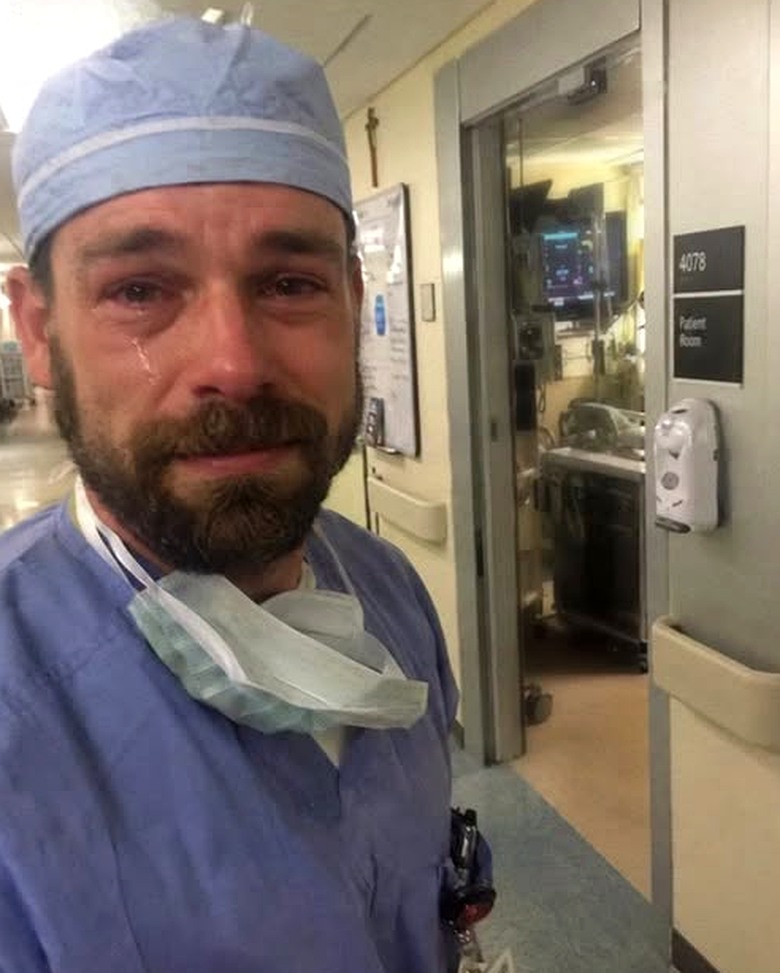
“Ben?” I whispered, my voice barely audible. He didn’t react, didn’t even seem to register my presence. He continued to pound the floor, a primal expression of anguish etched on his face. I knelt beside him, reaching out to touch his shoulder, but he flinched away. “Ben, what’s wrong?”
He finally looked up, his eyes red and swollen. “Go away, Sarah,” he rasped, his voice raw with emotion. “Just… go away.”
“I can’t do that,” I said, my own tears starting to fall. “Arnold told me. About your hands. About the surgeries.”
He closed his eyes, a fresh wave of tears escaping. “It’s… it’s over, Sarah. My career. Everything I’ve worked for. It’s just… gone.” He opened his hands, and I saw it then – the subtle, almost imperceptible tremor that ran through them. It wasn’t a violent shake, but a constant, involuntary movement that would make even the simplest task a challenge, let alone a delicate surgical procedure.
“It’s not over, Ben,” I said, trying to sound more confident than I felt. “We’ll figure it out. There are other things you can do. Teaching, research…”
He scoffed. “Teaching? Research? That’s not me, Sarah. I’m a surgeon. That’s all I am. That’s all I ever wanted to be.” Suddenly, the door burst open, and Dr. Caldwell, the Chief of Surgery, strode in, followed by Arnold and several other colleagues. A tense silence descended upon the room.
“What’s going on here?” Dr. Caldwell demanded, his voice sharp. He looked at Ben, then at me, his expression unreadable. “Sarah, I didn’t realize you were here.”
Before I could respond, a young resident, Emily Carter, stepped forward, her face pale. “He’s been covering for Dr. Harrison for months, Dr. Caldwell. He’s been taking on the difficult cases, the ones no one else wants, because Dr. Harrison was… struggling with a gambling addiction. He was making mistakes, but Dr. Ben was always there to fix them, to cover his tracks. He didn’t want anyone to find out about Dr. Harrison, or to lose their faith in him.” She paused, her voice trembling. “He was protecting someone else, and it cost him everything.”
A collective gasp filled the room. Ben, always the protector, always the one taking responsibility, had been sacrificing his own well-being to shield a colleague. The tremor in his hands wasn’t just a physical ailment; it was the physical manifestation of the immense stress and guilt he’d been carrying. Dr. Caldwell’s face softened, and he approached Ben, extending a hand. “I had no idea,” he said, his voice filled with remorse. “I just saw the symptoms, the declining performance. I should have asked more questions.” Ben took his hand, and a flicker of hope appeared in his eyes. The weight of unspoken things, finally lifted, allowed a small smile to grace his lips. The apple pie, still in my hand, didn’t seem so heavy anymore, but a symbol of a future where we could finally share the burden, together.
Every person sitting around the room exchanged a tense, silent glance as the weight of those words settled over the table. For years, everyone had assumed that quiet patience meant weakness, never suspecting that every receipt, certified letter, and legal document had been carefully preserved for this exact moment.
Every person sitting around the room exchanged a tense, silent glance as the weight of those words settled over the table. For years, everyone had assumed that quiet patience meant weakness, never suspecting that every receipt, certified letter, and legal document had been carefully preserved for this exact moment.