“Oh,” I said, my voice catching in my throat. "I'm sorry, honey." I felt a coldness creeping over me, a fear I hadn’t known since the day they told me my daughter was alone. Then Clara looked up, her eyes filled with a strange, knowing sadness. “She said you forgot her favorite blanket. The blue one with the stars.”
The Blue Blanket
The blue blanket. I hadn’t thought about that blanket in years. It was a gift from my mother, a hand-knitted heirloom she’d made for the twins. I remembered packing one for Clara, instinctively. But the other… the other I’d carefully folded and placed in a memory box, along with the tiny knitted hat and a single, impossibly small footprint.
I spent hours searching the attic, finally unearthing the box. My hands trembled as I lifted the lid. There it was: the blue blanket, still soft and smelling faintly of lavender. As I held it, a wave of grief washed over me, so potent it nearly buckled my knees. I hadn’t allowed myself to truly mourn Elara, hadn’t allowed myself to *feel* the loss. I’d buried it, convinced myself it was for the best.
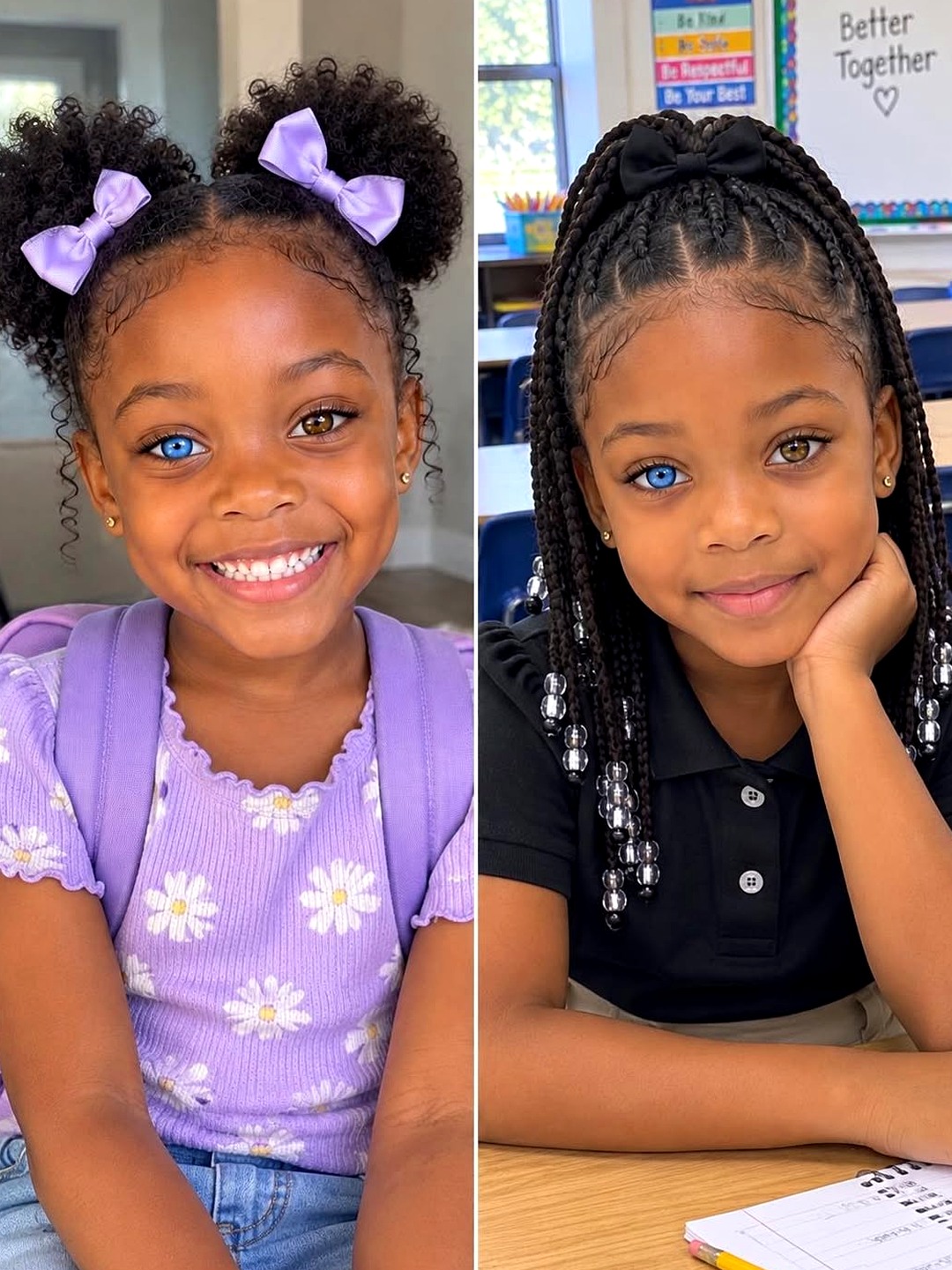
The next day, I brought the blanket to school. Miss Prentice looked at me with a mixture of concern and confusion. “Clara was so happy to see you,” she said, leading me to the classroom. “She’s been asking about the blanket all morning.” And there, in a corner of the room, sat a little girl with bright blue eyes and a familiar face.
She was drawing, surrounded by other children. It was Clara’s face, undeniably, but… different. More ethereal. She looked up as we approached, a shy smile gracing her lips. “Mummy,” she whispered, “you remembered!”
But the other children… they didn't seem to acknowledge Elara's presence. They played *around* her, not *with* her. They spoke *to* Clara, not to both of them. Miss Prentice gave me a look that said she was trying to be supportive, but clearly didn't understand. I asked to speak to the school counselor.
I needed answers, and I needed them now. The counselor, Mrs. Davison, was a calm, reassuring presence, but her initial assessment was unsettling. "Clara seems perfectly adjusted," she said. "Perhaps this is just a very vivid imaginary friend."
The Old Journal
“An imaginary friend who knows my mother’s name and my favorite blanket?” I challenged, my voice shaking. Mrs. Davison sighed. “Children grieve in different ways, Mrs. Harding. Sometimes, they create… companions to cope with loss.”
I refused to accept that explanation. Something wasn't right. I drove home in a daze, desperate for answers. I started searching through old boxes, anything that might shed light on what was happening. That’s when I found it: my journal from 2019. I hadn’t looked at it in years.
The entries were raw, filled with pain and confusion. But as I read, a detail jumped out at me. A conversation with Dr. Albright, the neonatologist who had overseen my care. “There were complications, yes,” I’d written. “But he said… he said there was a very slight chance, a one in a thousand, that Elara might have… a congenital condition. Something that wouldn’t be immediately apparent. He said it could manifest later in life, if at all.”
The truth was finally coming out — and there was no turning back now… (Continue to Part 3 →)